
The World of Persian Rugs: History, Craft and Style Guide
Posted by Rugs.net on Apr 14th 2026
Rugs.net • The Knowledge Series
The World of Persian Rugs:
History, Craft & Style
From Nomadic Origins to the Royal Court Loom
A complete guide to the most enduring textile art in human history
When most people think of rugs, the Orient comes to mind instinctively. Nobody associates the word “carpet” with France or Scandinavia. That association with the East is entirely natural and well-founded: it is in Persia, the Caucasus, Anatolia and Central Asia that the knotted pile rug was born, developed, and elevated to a high art form. It served simultaneously as floor covering, daily-use object, symbol of status, and a living expression of a people’s culture.
This article translates the scholarship preserved in classic rug literature into a practical guide for collectors and buyers. Whether you are approaching Persian rugs for the first time or deepening an existing knowledge, this is the foundation everything else rests on.
• • •
01
Approaching the World of the Carpet
For the peoples of the East, a rug was never simply furniture. A Persian man ate on his rugs, slept on them, and retreated to a rug-lined room as his private sanctuary. He prayed on them five times a day. The Persians called the carpet ghali, meaning literally something you tread upon with your feet. Far from being diminished by that description, the carpet found in it a deep cultural role: an object used, consumed, and loved rather than merely admired.
That is what separates a carpet from a painting. We evaluate a painting using Western frameworks of space, proportion, and perspective. A carpet is almost always anonymous, conceived from the beginning as something alive that serves daily life. Its ornament rests on exactly two concrete elements: pattern and color. Their interaction creates style, and style is what every serious buyer and collector is ultimately reading when they look at a rug.
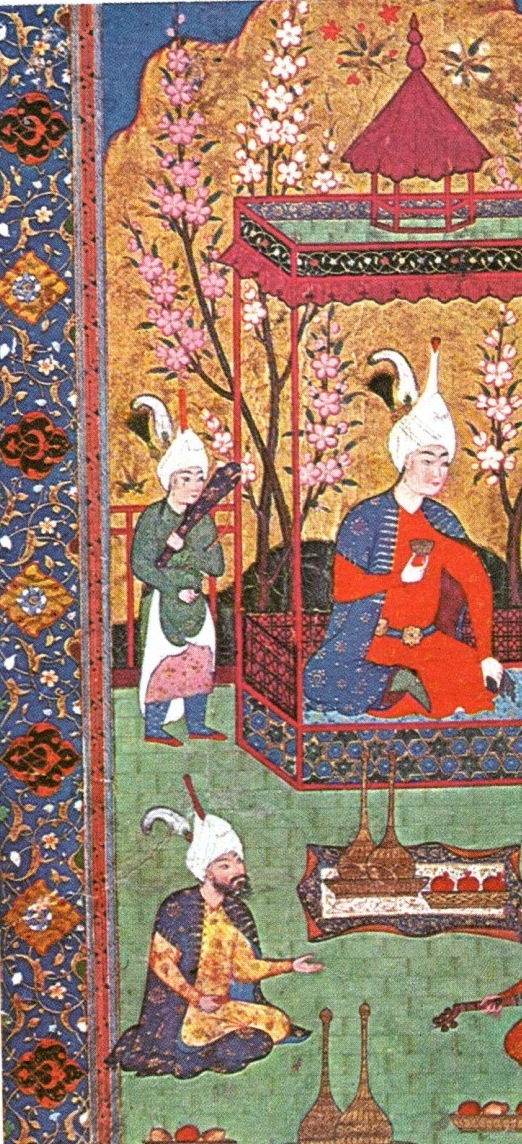
Within the Islamic world, the carpet became simultaneously an instrument of artistic expression and a sacred object. By the end of the 13th century, Marco Polo was already writing in his travel accounts that in these eastern lands the finest and most beautiful carpets in the world were being made. That reputation has endured for seven hundred years.
• • •
02
What a Knotted Rug Actually Is
When we speak of a Persian or Oriental rug, we mean specifically a knotted pile textile. The structure has two layers: the foundation, formed by the interlacing of vertical warp threads and horizontal weft threads, and the pile, the visible surface of cut tufts that give the rug its texture and depth.
Each knot is tied individually around two warp threads. After each row, one or more weft threads lock the row in place and the pile yarn is cut. Thousands, sometimes millions, of these individual knots together create the image. Each cut tuft is one pixel in an extraordinarily complex textile mosaic. To build a pattern, weavers switch colors from knot to knot as the design demands.
Two principal knotting techniques exist: the asymmetric Persian knot, which allows finer curved detail, and the symmetric Turkish or Ghiordes knot, which produces a firmer and more regular pile. These technical differences directly shape what each regional tradition can achieve. The raw material is almost always wool, cotton or silk, organic fibers subject to natural aging. Rugs are woven on looms: either horizontal portable looms suited to nomadic life, or fixed vertical looms suited to settled city workshops and court manufactories.

• • •
03
The Origins of the Knotted Carpet
Where did the knotted rug originate? Two theories have long stood against each other. The first holds that nomadic peoples of Central Asia developed the pile rug independently, as a practical substitute for animal skins to insulate against cold ground. The second argues that the rug was invented by settled peoples who already used the vertical loom, conceived from the outset as an object of beauty rather than mere necessity.
In 1949, archaeology delivered its most important contribution to this debate. In the frozen burial mound of a Scythian chieftain in the Pazyryk Valley of the Siberian Altai mountains, excavators found a knotted pile carpet preserved almost entirely intact by ice. It is dated to approximately the 5th century BC, making it the oldest known knotted carpet in the world. The Pazyryk carpet measures 200 by 183 centimeters. Its outer border shows a procession of horses and riders; its inner border shows a row of deer.
The sophistication of this piece suggests that knotting techniques had already been refined for a considerable time before it was made. Its elegance strongly supports the view that artistic ambition was present from the very beginning of the craft.
| The Pazyryk Carpet | Detail |
|---|---|
| Date | Approximately 5th century BC |
| Dimensions | 200 x 183 cm |
| Discovery location | Pazyryk Valley, Siberian Altai Mountains |
| Discovery year | 1949 |
| Outer border | Procession of horses and riders |
| Inner border | Row of deer |
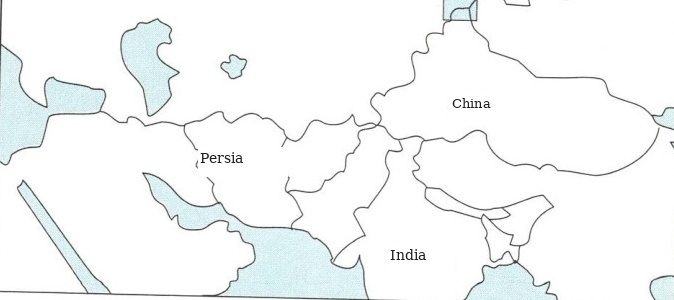
From Central Asia, the knotted textile spread westward into Persia, the Caucasus and Anatolia, eastward into China, and eventually south toward India. Each region absorbed the technique and transformed it according to its own cultural traditions, creating the remarkable diversity of Oriental rug styles we know today.

• • •
04
The Four Worlds of Carpet Making
One of the most useful frameworks for understanding Persian and Oriental rugs is recognizing that they were produced in four fundamentally different environments. These are not just categories of origin. They are windows into entirely different ways of life, each leaving its unmistakable signature on the finished piece.
The Nomadic Rug
Made on portable horizontal looms that could be dismantled and loaded onto animals, nomadic rugs carry an inherent freedom and vitality. Patterns are geometric, abstract, drawn from tribal memory passed down through generations rather than from formal designs on paper. Colors tend toward strong contrasts. What these pieces lack in technical refinement they more than compensate for in authenticity and life. Baluch rugs are a classic example, as are the tribal Afshar pieces shown below.

The Village Workshop Rug
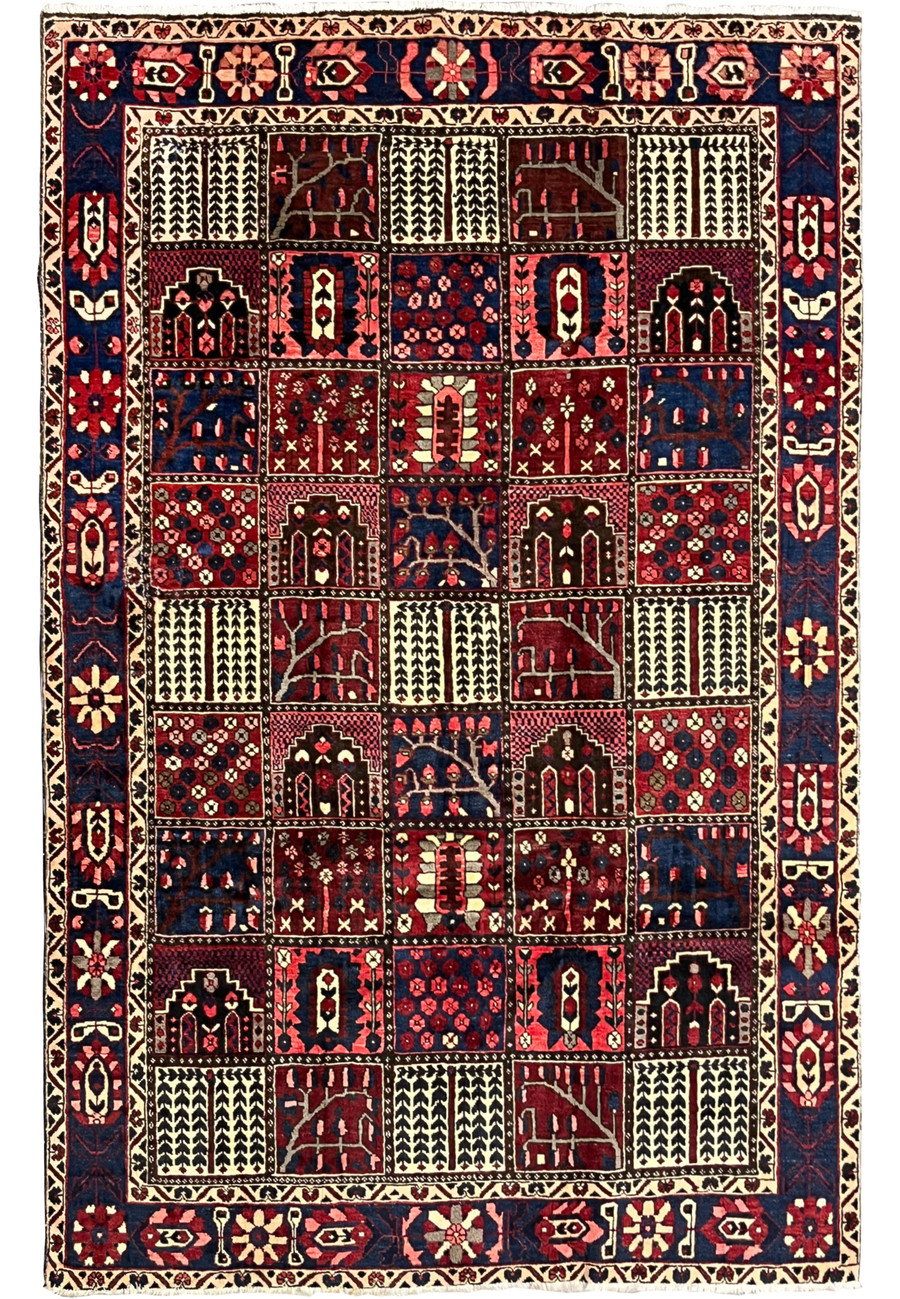
As nomadic peoples settled, their weaving traditions settled with them. The village rug retains the geometric directness of nomadic work but with greater regularity and more deliberate color composition. Patterns still come largely from tribal memory rather than formal designs. Hamedan, Sarough, and Gholtogh are strong examples of this tradition.
The Urban Workshop Rug
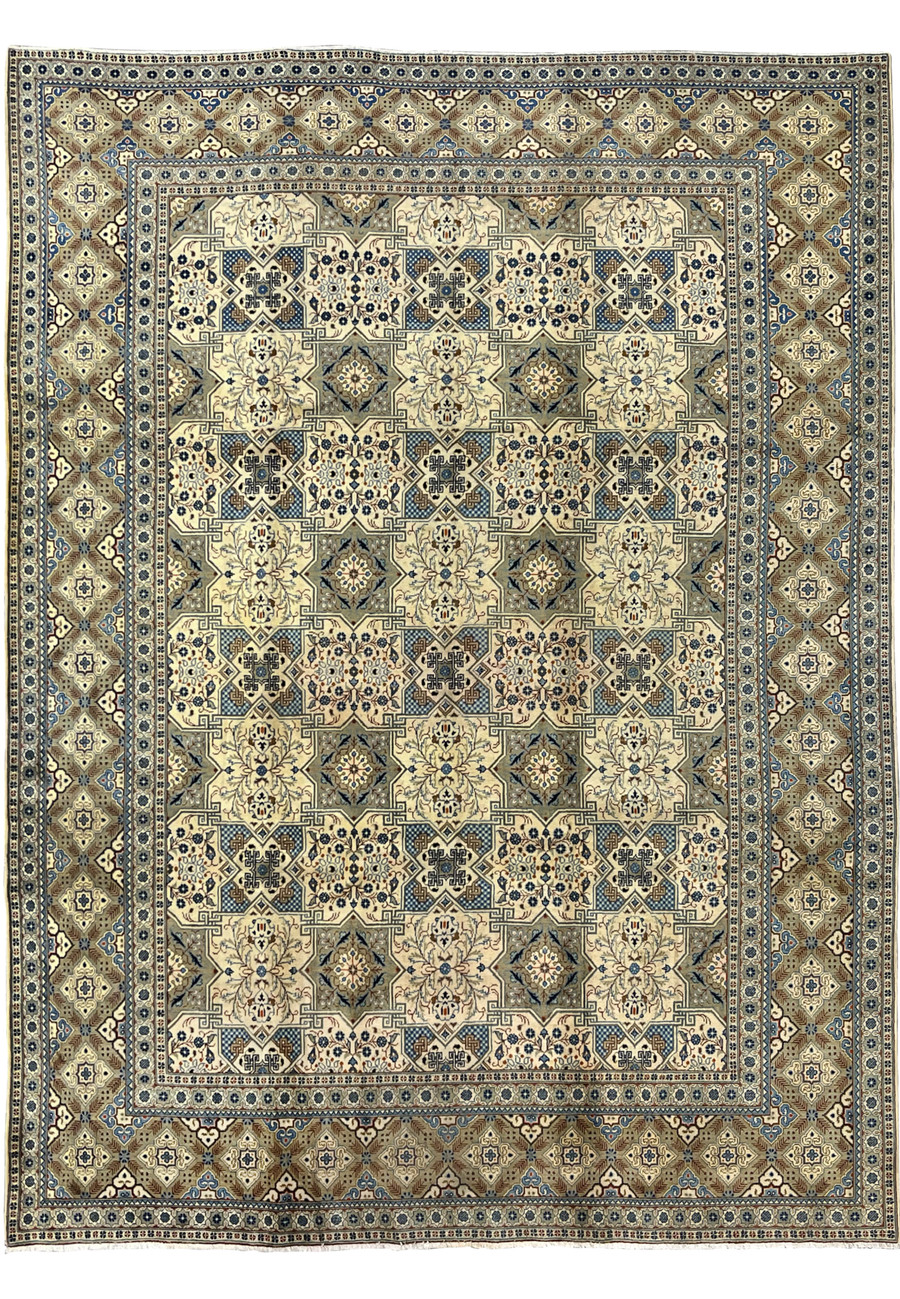
Urban workshops in the great Persian cities produce rugs of extraordinary refinement. Patterns are drawn on graph paper by professional designers and translated knot by knot onto the loom by skilled craftsmen. Geometric motifs give way to flowing curvilinear arabesques, floral sprays, and elaborate medallion systems. These are the rugs most prized by Western collectors. Tabriz, Isfahan, and Kashan are the three supreme names of this tradition.
The Royal Court Manufactory
At the apex stands the royal court manufactory. Under rulers such as Shah Tahmasp, state workshops employed the finest master weavers alongside court painters of the first rank. The resulting pieces are staggering in complexity, often woven entirely in silk with designs of labyrinthine intricacy. Very few survive outside museums. When we speak today of Qum silk rugs or signed Nain 6 LA pieces, we are looking at the living inheritors of this court tradition.
• • •
05
Style: Pattern and Color
Style in a carpet rests on exactly two concrete elements: pattern and color. Pattern can range from the simple repetition of a single geometric motif, delivered with the confident economy of the nomadic weaver, to the labyrinthine arabesques of a Safavid court carpet filled to every edge with overlapping detail. Neither is superior. They are expressions of entirely different cultures and purposes.
Color tells the same story in a different language. Nomadic work favors bold, high-contrast palettes that reveal sophisticated harmony under close inspection. Village rugs draw on the rich naturalistic dyes of their region. City workshop rugs show carefully balanced palettes designed with a professional eye. Court manufactory pieces deploy color with the precision of miniature painting.
| Production Type | Pattern | Color | Key Examples |
|---|---|---|---|
| Nomadic | Geometric, tribal, angular | Bold, high contrast | Afshar, Baluch, Qashqai |
| Village | Geometric with floral influence | Warm, rich, naturalistic | Hamedan, Sarough, Bakhtiari |
| Urban Workshop | Curvilinear floral, medallion | Balanced, refined, graduated | Tabriz, Isfahan, Kashan, Nain |
| Court Manufactory | Supreme complexity, painterly | Museum-quality, silk highlights | Safavid silk, Qum |
• • •
06
The Provenance Problem: What "Buchara" Really Means
One of the most persistent sources of confusion in the rug world is the use of place names that do not describe where a rug was actually made. The most notorious example is "Buchara" or "Bukhara." The city of Bukhara in Uzbekistan was the great trading and export center for the geometric red rugs of the Tekke Turkmen nomads of Central Asia. It gave its name to those rugs in Western markets, despite the fact that the Tekke people who wove them never lived there.
Many of the most recognizable rug names in the market are trade names, export names, or city names that attached themselves to a style for commercial reasons. The correct approach is always to read the rug itself: its pattern, its color palette, its knotting technique, and its structural details. At Rugs.net, every piece is described with full transparency about its actual origin, construction, and age. We are direct importers who have examined these rugs firsthand.
• • •
07
Dating: Antique, Semiantique and Modern
The rug trade classifies pieces by age using practical conventions. Antique rugs are defined as those produced before the introduction of synthetic aniline dyes, roughly before 1860 to 1870. These are genuinely rare. Rugs made before 1800 exist today almost exclusively in museums. Semiantique, or old, covers 1860 to the early 20th century, the pieces most commonly encountered in serious trade. Modern production begins around 1920, when European and American market demand began reshaping formats, palettes, and pattern choices.
One important caveat: in remote regions, genuinely traditional pieces with natural dyes continued to be made well into the 20th century, untouched by commercial pressure. These would be classified as modern by date but are antique in every cultural sense. Classification by age is a useful guide but should never override direct examination of the piece.

• • •
08
Shop Persian Rugs at Rugs.net
Direct importer to your door. Free shipping all 50 states including Alaska and Hawaii. Free returns with home pickup.
Authentic handmade pieces from Isfahan, Tabriz, Kashan, Nain and more.
The great city workshop tradition: medallion, Mahi fish and panel designs.
Signed masterpieces from Persia’s most celebrated weaving city.
Classic floral medallion designs in crimson, navy and ivory.
Ultra-fine wool and silk, the pinnacle of modern Persian weaving.
The living heirs to the Safavid court tradition, woven entirely in silk.
Raw nomadic energy, geometric patterns and deep earthy tones.
Exceptional handmade pieces at reduced prices, while inventory lasts.
• • •
Why Buy From Rugs.net
Direct Importer. No Middleman.
Guaranteed Authentic.
✓ Free shipping to all 50 states including Alaska and Hawaii
✓ Free returns with home pickup
✓ Ships within 24 hours
✓ 10% price beat guarantee
✓ Every rug authenticated and described with full transparency
Questions? Call 855-576-7705 or email info@rugs.net