Why You Can't Find Persian Rugs on Amazon (And What to Do About It)
Posted by Rugs.net on Apr 25th 2026
Search for Persian rugs on any major marketplace and you will find something strange. Listings with titles like “Esfah4n rug,” “Tebriz carpet,” “Persiaan hand knotted,” and “orientall rug from Iiraan.” Deliberate misspellings, coded language, vague geographic references. You know what the seller means. The platform’s algorithm apparently does not. Or does it?
If you have wondered why this is happening, you are asking the right question. The answer involves US sanctions policy, corporate over-compliance, payment platform politics, and a fundamental misunderstanding that has been allowed to persist because no one with a platform has bothered to explain it clearly.
We are going to explain it clearly. Because you deserve to understand exactly what you are navigating when you try to buy a genuine Persian rug, and because the truth is more straightforward than the confusion suggests.
What US Law Actually Says About Persian Rugs
The United States has maintained comprehensive sanctions on Iran since 1979, administered by the Office of Foreign Assets Control (OFAC) within the US Treasury Department. These sanctions are real, they are serious, and they do restrict a wide range of commercial and financial activity involving Iran.
But the sanctions have never prohibited American consumers from buying or owning Persian rugs. What they originally restricted was the direct importation of Iranian goods into the United States. That restriction was further amended by the Iran Threat Reduction Act and various OFAC rulings over the years. The current position under US law is specific: it is legal for American businesses and consumers to buy, sell, and own authentic Persian rugs that have already been lawfully imported into the United States.
Read that again. Buying a Persian rug from a US-based dealer is legal. Selling a Persian rug as a US-based business is legal. Describing your rug accurately as Persian, Iranian, or from Isfahan, Tabriz, Qum, Kashan, or any other Iranian city is legal. None of this violates US sanctions law.
The Legal Position in Plain Terms
Legal in the United States:
Buying a Persian rug from a US retailer. Selling a Persian rug as a US business. Describing a rug accurately as Persian or Iranian. Importing rugs through licensed channels under applicable OFAC guidance.
Restricted under US sanctions:
Direct financial transfers to Iranian entities. New business contracts with Iranian companies. Certain import and export transactions without proper licensing. None of these apply to buying a rug from a US dealer.
The confusion exists because the platforms, payment processors, and large corporations have chosen to apply blanket keyword-based restrictions that go far beyond what the law requires. This is a business decision, not a legal requirement. It is called over-compliance, and it has had the effect of making a perfectly legal transaction appear legally problematic to ordinary consumers. It is not.
Why the Platforms Restrict Persian Rugs Anyway
Large marketplaces and payment platforms operate compliance systems that are largely automated. Rather than employ the legal expertise required to evaluate every product category against every applicable sanction regime with the nuance the law actually requires, they build keyword filters. If a listing contains the words “Iran,” “Persian,” “Isfahan,” “Tabriz,” or similar terms, it triggers a review or an automatic removal.
This approach protects the platform from any conceivable liability at the cost of blocking thousands of completely legal transactions. For a corporation managing millions of listings, the calculation is straightforward: the cost of over-blocking legal Persian rug sales is trivial. The reputational cost of being seen to facilitate a sanctions violation, however unlikely, is not.
The result is absurd in practice. A US-based seller of lawfully imported, legally owned Persian rugs cannot accurately describe their products on the major platforms. They cannot say the rug is from Isfahan. They cannot say it is Persian. They cannot include the correct spelling of any Iranian city in the listing title or description without risking removal.
So they misspell. “Esfah4n.” “Tebriiz.” “Persiaan.” “Iiraan.” “Orientall.” These are not errors. They are deliberate circumventions of keyword filters by sellers who are doing nothing illegal but who have been forced to obscure accurate product information to remain on platforms that tolerate their business only when it is described inaccurately.
Think about what this means for you as a buyer. The platform that is supposed to protect you from fraud is forcing sellers to misdescribe their products. You cannot search for “Persian rug” and find accurately listed Persian rugs. You are searching through a fog of deliberate misinformation created by the platform’s own policies. This is not consumer protection. It is the opposite.
The Payment Platform Problem
Marketplace restrictions are frustrating. Payment platform restrictions are financially damaging in a way that goes far beyond inconvenience.
Some payment processors apply the same keyword-based logic to transactions that marketplaces apply to listings. A Persian rug business that uses certain payment platforms may find that funds are frozen, accounts are limited, or payments are blocked if the word “Persian” or “Iranian” appears in a product description or transaction record. This happens to businesses that are doing nothing illegal, operating in full compliance with US law, and selling goods that are entirely legal to sell.
The impact on small businesses is severe. A frozen payment during a peak sales period can cause cascading financial damage. A suspended account can take weeks to resolve, during which time a small business may be unable to process sales at all. This is not a theoretical risk for Persian rug dealers in the United States. It is a recurring practical reality.
For buyers, the practical implication is straightforward. When you buy a Persian rug from a specialist retailer’s own website, you are transacting with a business that has built its payment infrastructure around this reality. The safest and most consumer-protected payment method for any online rug purchase is a credit card.
Always Pay with a Credit Card
A credit card gives you chargeback rights that no other payment method provides. If you pay for a rug and it is not as described, not delivered, or you are otherwise defrauded, your credit card issuer can reverse the charge. This consumer protection exists regardless of what payment processor the seller uses or what platform the transaction occurs on.
Bank transfers, wire payments, and certain digital wallet transactions do not carry the same protections. For any significant purchase, credit card is the right choice.
The Demand Has Not Gone Anywhere
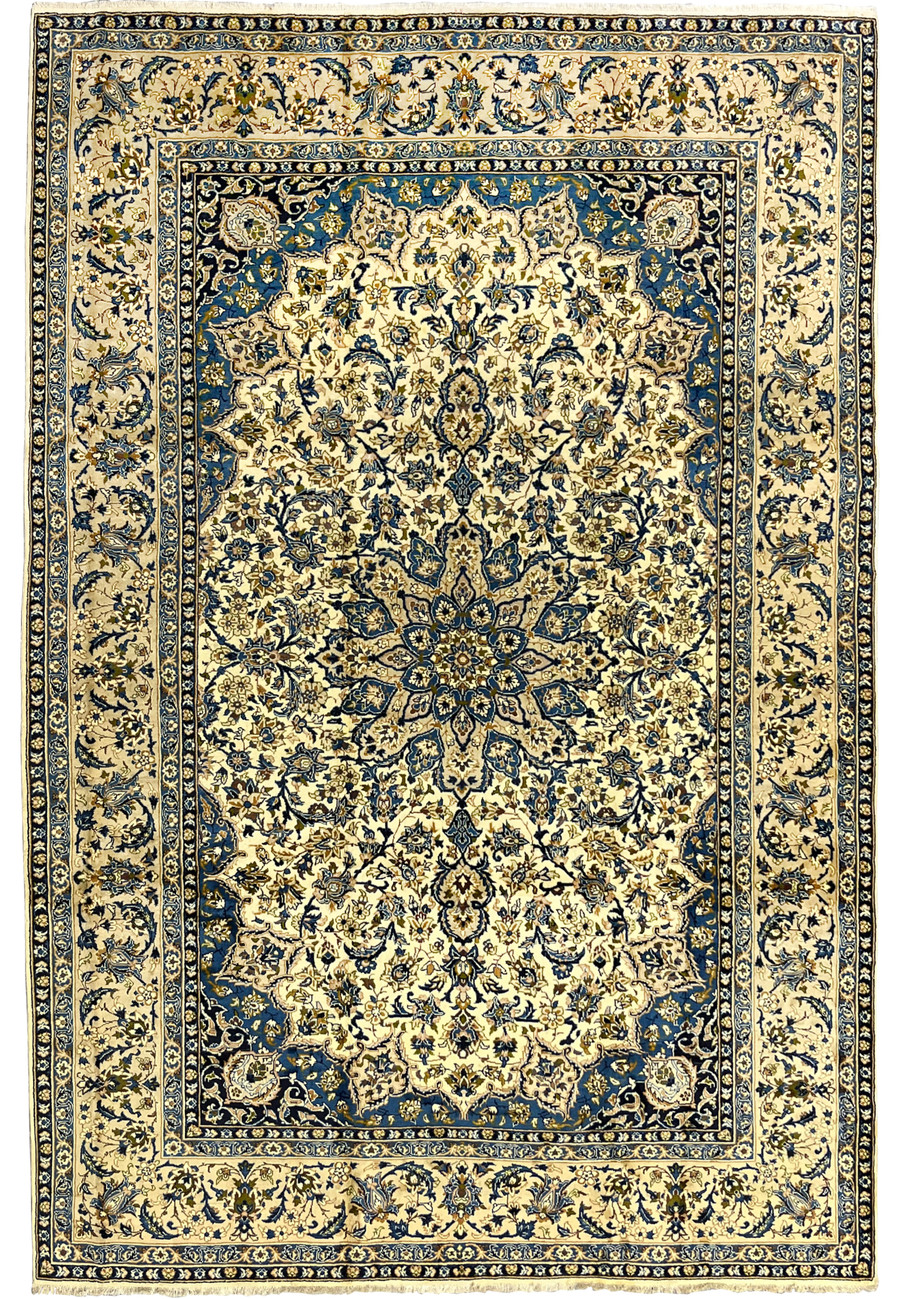
10'2 x 14'3 Persian Kashan Rug. Platform restrictions have not reduced demand for genuine Persian Kashan rugs. They have only made it harder to find them through the channels most people use first. The rugs exist. The buyers exist. The specialists who carry them exist.
None of the platform restrictions have diminished American consumers’ interest in genuine Persian rugs. If anything, the difficulty of finding them through mainstream channels has increased their desirability among buyers who understand what they are looking for. Demand for authentic Persian rugs in the United States has remained strong, and the collector market for fine signed pieces continues to grow.
What the restrictions have done is fragment the market. Buyers who do not know where to look end up either purchasing misdescribed rugs from sellers working around platform filters, or they end up buying something that is not genuinely Persian at all, labeled “Persian-style” or “oriental-inspired,” which is a machine-made synthetic rug with a pattern derived from the Persian tradition but sharing nothing else with it.
The buyers who know what they are doing go directly to specialist dealers who operate their own websites. Not because those websites are more convenient than a large marketplace. Because a specialist dealer operating their own site can describe their products accurately, stand behind them with real expertise, and transact with buyers who are informed enough to seek them out. This is how the serious Persian rug market in America has always worked, and platform restrictions have only reinforced it.
Why Buying From a Specialist Dealer Matters

8'2 x 11'2 Signed Paradies Persian Tabriz Rug. This rug is described exactly as what it is: a signed Persian Tabriz, accurately attributed, accurately photographed, accurately priced. A specialist dealer can do this. A platform listing cannot.
A specialist Persian rug dealer is not simply a reseller. They are a source of knowledge that a marketplace algorithm cannot replicate, and the value of that knowledge increases with the value of the rug you are considering.
When you buy a Persian Bijar or a signed Nain 6 LA from a specialist, you are buying from someone who can tell you who wove it, what the construction is, what the knot density is, what the foundation material is, and why the price reflects those specific qualities. You are buying from someone who can answer your questions before you buy, not a returns algorithm after you do.
Rugs are heavy. Shipping costs are real. Running a specialized e-commerce operation with genuine expertise and proper inventory management is expensive. These are not businesses with the margin to cut corners or absorb the reputational cost of selling misrepresented products. A small specialist dealer’s entire livelihood depends on the accuracy of their descriptions and the quality of their service. A marketplace listing has no such accountability.
This is not a criticism of large marketplaces as a concept. For many product categories they serve buyers extremely well. But for a handmade rug that may cost thousands of dollars and that you will live with for decades, the difference between buying from an accountable specialist and buying from an anonymous listing in a filtered marketplace is not a small difference. It is the entire difference.
We are not asking you to buy from us specifically. We are asking you to buy from a specialist you can verify, reach by phone, hold accountable by name, and return to with questions. Whether that is Rugs.net or another legitimate Persian rug dealer, that accountability matters. For a significant purchase, it is the most important thing you can verify before you buy.
How to Buy a Persian Rug Safely in the United States
Given everything above, here is practical guidance for any American buyer looking for a genuine Persian rug today.
Buy from a specialist dealer’s own website. A legitimate Persian rug specialist operating their own site can describe their products accurately, is searchable by name, has a physical location or verifiable business history, and has customer service you can reach before and after purchase. Look for dealers who show their phone number, physical address, and return policy prominently.
Always pay with a credit card. Your credit card chargeback right is the single strongest consumer protection available for an online purchase. If the rug is not as described, not delivered, or you are otherwise defrauded, your credit card issuer can reverse the charge. Use it.
Verify the description against the back of the rug. A genuine hand-knotted Persian rug shows its pattern clearly on the back with individual knots visible and no backing material. Any legitimate dealer will show back-of-rug photographs on request. If they will not, do not buy.
Understand what the terminology means. “Hand-knotted” means what it says. “Hand-tufted” is not the same thing and is far less durable. “Persian-style” or “Persian-inspired” means machine-made with a Persian pattern. A genuine Persian rug from Iran is described as hand-knotted, with a specific city of origin: Kashan, Isfahan, Tabriz, Nain, Bijar, Qum, Mashad, or others.
Check the return policy before you buy. Any confident specialist will offer free returns. A rug is a large purchase and the color and scale can look different in your home than on screen. Free returns are the minimum standard of a legitimate dealer. If returns are not free or are not offered at all, factor that into your decision.
Support small businesses directly. The specialist Persian rug market in the United States is a small community of dealers with deep knowledge, real inventory, and genuine accountability to their customers. When you buy directly from a specialist’s website, you are supporting a business that depends on its reputation in a way that a large marketplace intermediary never does. Your purchase matters to them personally. That accountability is worth something.
Shop Genuine Persian Rugs at Rugs.net
Rugs.net is a direct importer of authentic handmade Persian and oriental rugs based in Freeport, New York. Every rug is accurately described with its true origin, construction, materials, and knot density. We are reachable by phone and email before and after purchase. Free shipping to all 50 states. Free returns. Ships within 24 hours.
100% authentic, from Iran. Every piece accurately described with true origin and construction.
The most iconic Persian city rug. Correctly identified. Accurately described.
Isfahan. Not “Esfah4n.” Not “Isfahaan.” Isfahan. From Iran.
Tabriz. Not “Tebriiz.” Not “Tebriz.” Tabriz. Spelled correctly. Sold honestly.
The strongest handmade rug in the world. 100+ year lifespan. No misspellings needed.
800 to 1000 KPSI. Pure silk. Signed by master weavers. Qum, Iran.
Also: Nain, Mashad, Sarough, Hamedan, Gholtogh, Baluch, Oriental rugs, all rugs, clearance.