











Rugs.net
6'9" x 9'10" Persian Bijar Bukan Iron Rug | Stepped Diamond Medallion | Ivory and Terracotta | 340 to 360 KPSI

- SKU:
- 55437-B2
- Shipping:
- Free Shipping
- ORIGIN:
- Bijar Rugs
- SIZES:
- 7x10
- SHAPES:
- Rectangular
| Exact Size in ft: | Width: 6'9" x Length: 9'10" |
| Size in Inch: | Width: 81" x Length: 118" |
| Size in meters: | Length: 3.02 m x Width: 2.07 m |
| Some of many colors: | Terracotta red, brick red, salmon pink, ivory, cream, midnight navy, soft blue, sage green, olive, mustard gold, camel, soft brown, accents of black |
| Woven: | 100% Hand-knotted | Handmade |
| Foundation: | 100% Cotton |
| Pile: | 100% Wool |
| Pile Height: | 0.5 inch |
| Shape: | Rectangular |
| Style: | Geometric Medallion with Herati |
| Origin: | Persian Bijar | Made in Persia |
| KPSI: | 340 - 360 |
| Condition: | Excellent | Never used |
6'9" x 9'10" Persian Bijar Bukan Iron Rug | Stepped Diamond Medallion | Ivory and Terracotta | Hand-knotted Wool | 340 to 360 KPSI
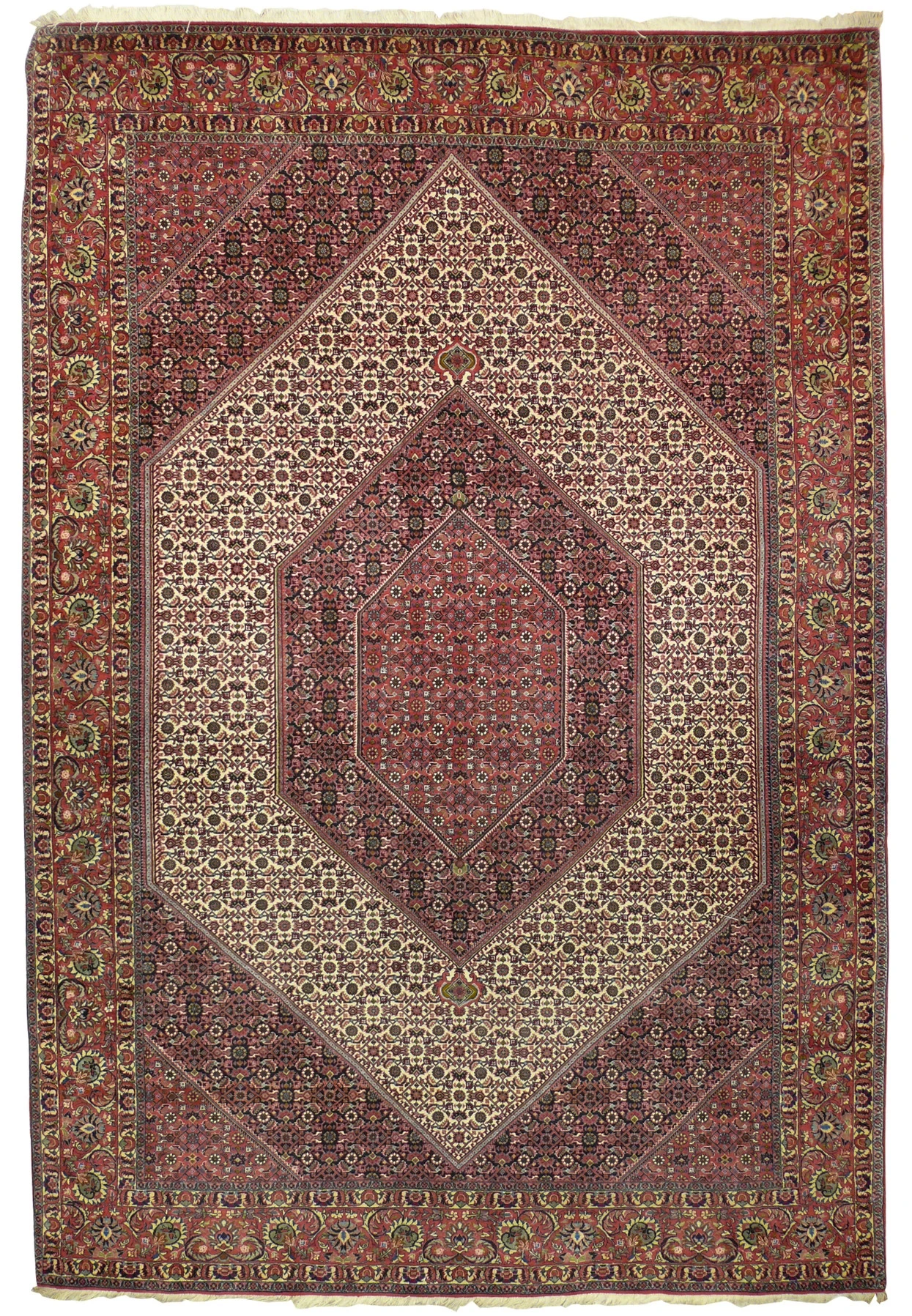
This 6'9" x 9'10" Persian Bijar from the village of Bukan is a true iron rug, hand-knotted in Iranian Kurdistan on a tightly packed cotton foundation with an exceptionally dense wool pile at 340 to 360 KPSI. The composition is built around a large stepped diamond medallion centered on an ivory ground covered in the classic Bijar herati allover pattern, framed by a wide brick-red main border of bold turtle palmettes and curling vines. At nearly half an inch of pile height and the legendary Bijar weight, this is one of the heaviest and most durable Persian rugs ever made, often called the "iron rug of Persia" because of its near-indestructible structure. Read our complete guide to Bijar rugs for the full background.
Design and Motifs
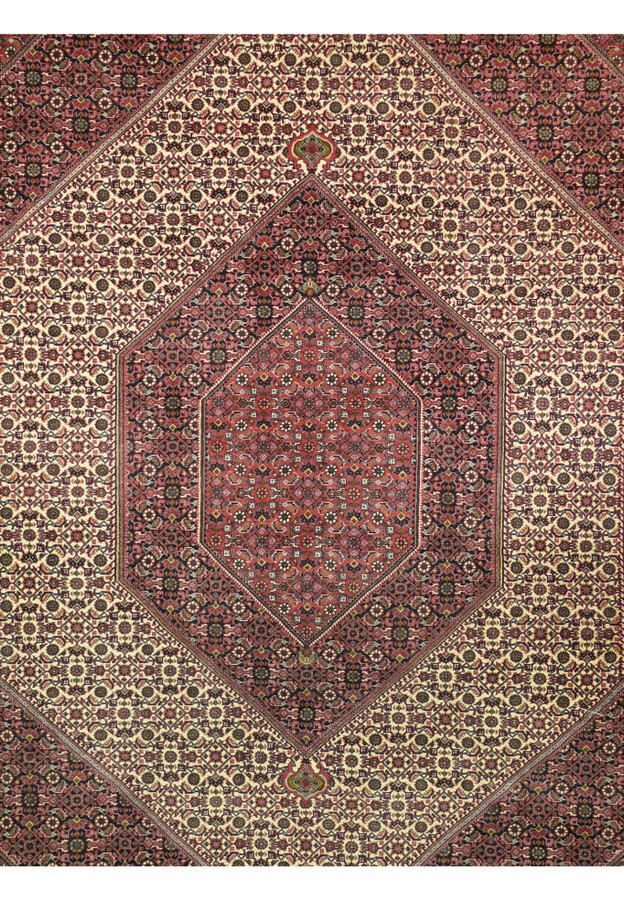
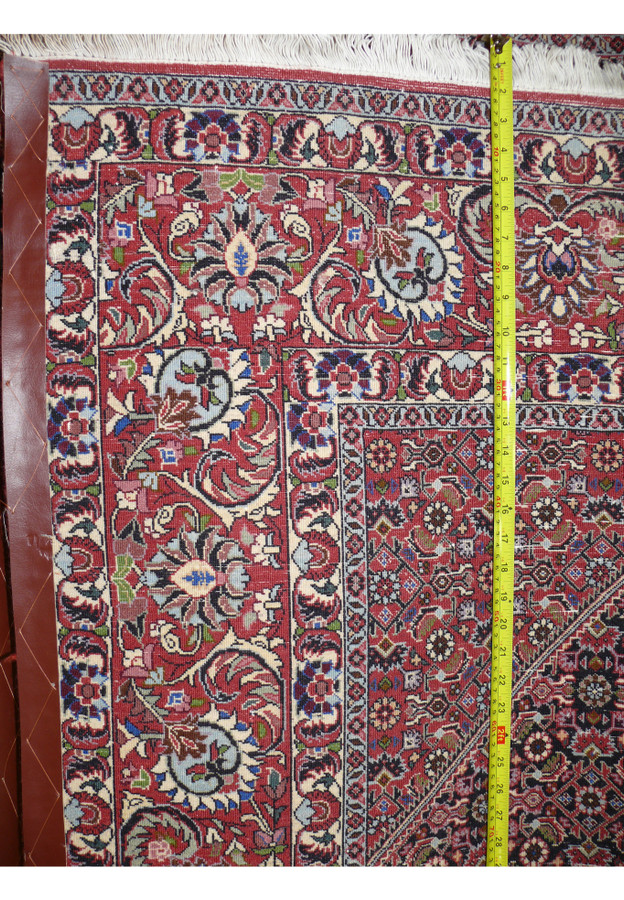
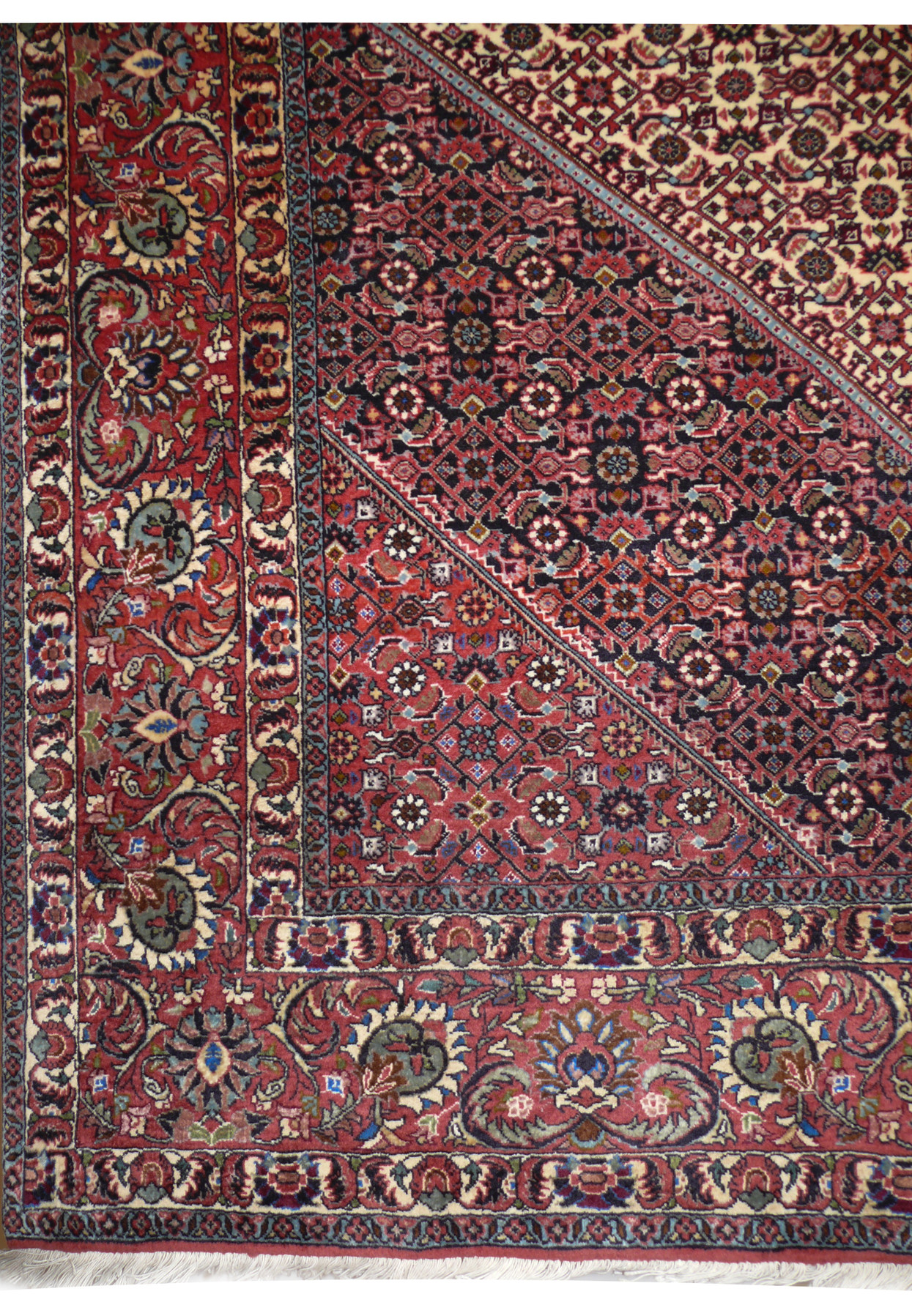
The layout is the classic Bijar lachak-toranj, a stepped central medallion with corresponding corner spandrels, drawn here in the geometric Kurdish vocabulary rather than the curvilinear city style. The central medallion is a large hexagonal toranj rendered as a terraced diamond on a brick-red ground, with two arrow-tipped pendants reaching toward the head and foot of the rug. Inside the medallion, the entire surface is densely woven with the Bijar mahi or herati pattern, four lancet leaves arranged around a small rosette inside a diamond lattice, an ancient Persian motif that scholars trace back to Safavid court drawings and that Bijar weavers consider the village's signature design. The same herati pattern continues outside the medallion across the ivory main field, where it is rendered in tiny scale and stretches in every direction in unbroken rhythm. The four corner spandrels, framing the diamond on each side, repeat the herati on a salmon-pink ground bordered by navy, creating a strong tonal break between the field and the medallion. The wide main border carries oversize turtle palmettes alternating with split-leaf curling vines on a deep brick-red ground, framed by multiple guard stripes including a delicate meandering vine band in ivory and a small reciprocal trefoil minor border. Every motif here is part of the Senneh-Bijar weaving heritage, and the geometric handling of curvilinear forms is what makes a Bijar instantly recognizable.
Colors and Placement
The palette is a balanced Bijar trio of warm terracotta red, luminous ivory, and deep midnight navy, accented by a chorus of secondary colors that animate the herati without ever crowding it. The central medallion sits on a saturated brick-red ground, with the herati lattice drawn in midnight navy, ivory rosettes punctuating each diamond intersection, and tiny accents of mustard gold, soft blue, and sage green woven through the leaves. The ivory main field framing the medallion glows in soft cream, almost candlelit against the surrounding red, and carries the same herati pattern in miniature with the lattice drawn in navy and rust, the central rosettes again in ivory and white. The four corner spandrels switch to a salmon-pink ground that bridges the brick-red medallion and the cream field. Two small lozenge-shaped pendant cartouches sit at the top and bottom tips of the medallion, each filled with mustard gold and ivory rosettes on a navy ground. The main outer border runs in deep brick-red, with the turtle palmettes rendered in ivory, sage green, mustard, and navy, and the curling vines drawn in pale blue and olive. The narrow guard stripes alternate between a navy meander on ivory ground and a small reciprocal trefoil pattern in ivory and rust. The selvages are wrapped in dark navy wool, and ivory cotton fringes finish both ends of the rug.
Persian Bijar Bukan Rugs and Construction
Bijar is a small Kurdish town in northwestern Iran, set in the mountainous Garrus region of Iranian Kurdistan, and it has earned the nickname "the iron rug of Persia" for one specific reason. Bijar weavers use a unique double-weft technique combined with an extreme beat-down at the loom, where the weft is hammered into the warp with metal combs so forcefully that the finished rug is roughly twice as heavy and dense as a comparable Tabriz or Kashan of the same size. Bukan is one of the highest-quality Bijar weaving villages, and Bukan production is generally considered the finest expression of the Bijar tradition, with tighter knot counts, more refined palettes, and superior wool selection compared to standard Bijar village pieces. This rug is hand-knotted at 340 to 360 KPSI on a sturdy cotton foundation, which works out to roughly 530,000 to 560,000 knots per square meter, and over 3.27 million individual hand-tied knots across the full 6.18 square meter surface. The pile is a generous 0.5 inch high, the asymmetric Persian senneh knot is used throughout, and the wool is selected for high lanolin content so the colors deepen and the surface acquires a soft sheen with age. Construction of a Bukan Bijar at this density typically represents twelve to eighteen months of work for a single weaver, and these rugs are widely considered among the most durable hand-knotted rugs ever produced. A well-maintained Bijar will outlast the original owner and their grandchildren. Read more in our Bijar bends the rules blog.


Shipping
We are pleased to offer free shipping and free returns in all 50 states including Hawaii and Alaska, plus Puerto Rico and the US Virgin Islands. Shipping to Canada is free as well. Oversize and palace size rugs ship free too, no freight surcharge at any weight.
Order by 2 PM EST on a weekday and your rug ships the same day. Across the Northeast (NY, NJ, CT, PA, DE, MD, VA, DC, MA, RI, NH, VT, ME) our own drivers deliver guaranteed within 24 to 48 hours, handed to you at your door, never curbside. Weekend orders ship the next business day. White-glove delivery into the home is available by appointment.
Once your rug is shipped, we will email you the tracking number along with an estimated arrival time.
Please note that any country outside of the U.S. might charge you import taxes.
Returns Policy
To return contact info@rugs.net or (855) 576 7705
To facilitate a return, contact our Customer Service team via email at info@rugs.net with your order number to request a shipping label for your item. Purchases from Rugs.net can be refunded within 31 days, free of charge, with no restocking fee. If 31 days have gone by since your purchase, we are unable to offer you a refund or exchange. To be eligible for a return, your item must be unused and in the same condition that you received it, returned in like kind packaging.
Before we send out your item we take pictures for future reference.
- no pet residue or fur
- no dirt or grass
- no signs of wear, washing, or improper care
- no damage or stains
6'9" x 9'10" Persian Bijar Bukan Iron Rug | Stepped Diamond Medallion | Ivory and Terracotta | 340 to 360 KPSI

Related Products

6'9" x 10'4" Persian Bijar Rug | The Iron Rug of Persia | 340-360 KPSI

6'6" x 9'10" Persian Bijar Rug | Stepped Diamond Medallion on Ivory Herati Field | Navy Floral Border | 350 KPSI

9'10" x 13'2" Bijar Persian Iron Rug | Hexagonal Medallion
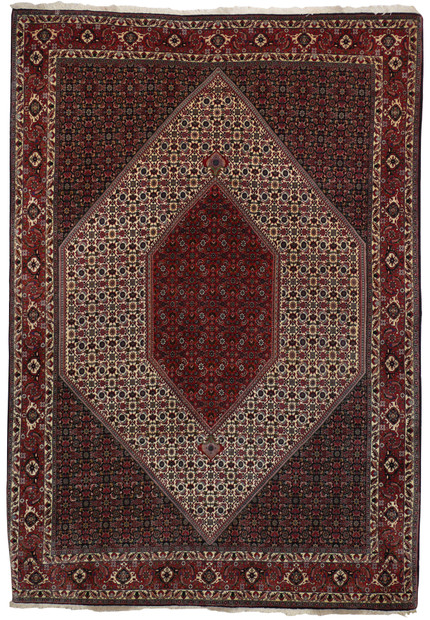
6'9 x 10 Persian Bijar Rug with Bold Diamond Medallion
Exact Size in ft: Width: 6'9" x Lengt
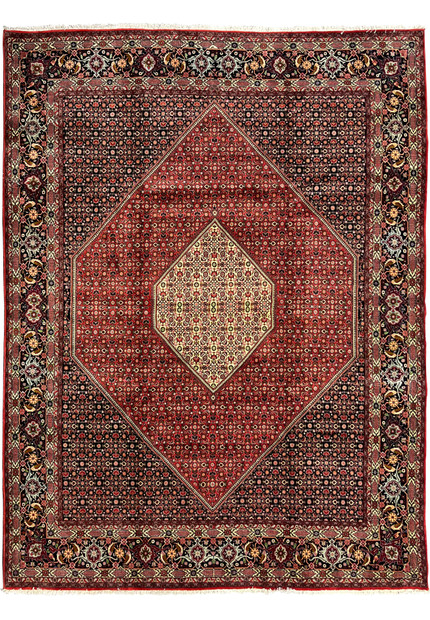
9'10 x 13'1 Bijar Persian Iron Rug
Exact Size in ft: Width: 9'10" x Leng