
Ask a rug dealer which is finer, a Nain or an Isfahan, and an honest one will ask what you mean by finer. Both come from the same corner of central Persia. Both are knotted in kork wool, the soft first shearing of the lamb, with silk worked into the design. Both reach knot densities that most weaving cities never approach, and both carry the woven signatures of workshops collected around the world. Nobody at Rugs.net will tell you one is better. We have handled both since 1985, and we keep both because they solve different rooms.
What follows is the difference, laid out plainly: where they come from, how they are graded, what they look like, how they feel underfoot and where each one belongs. Each section is illustrated with a Nain and an Isfahan from our own collection, side by side, so you are comparing real rugs rather than descriptions.
Two Cities, Two Histories
Isfahan is the older story. It was the Safavid capital in the 1500s and 1600s, and the court workshops of Shah Abbas produced the rugs that now hang in the great museums. The city's weaving revived in the early 20th century and reached a second golden age after 1950, when families such as Seirafian, Haghighi, Emami and Davari set standards that are still the reference point for fine Persian weaving. Read the long version in our complete guide to Isfahan rugs.
Nain is the younger. A small desert town on the edge of the Kavir, historically known for fine woolen cloth, it turned to rug weaving only in the 1920s and 30s, when demand for that cloth collapsed. The weavers took the Isfahan vocabulary of palmettes, vines and medallions and made it their own, in a palette so restrained it became a signature. The Habibian workshop gave Nain its most celebrated name. In less than a century Nain went from newcomer to one of the most respected names in the trade.

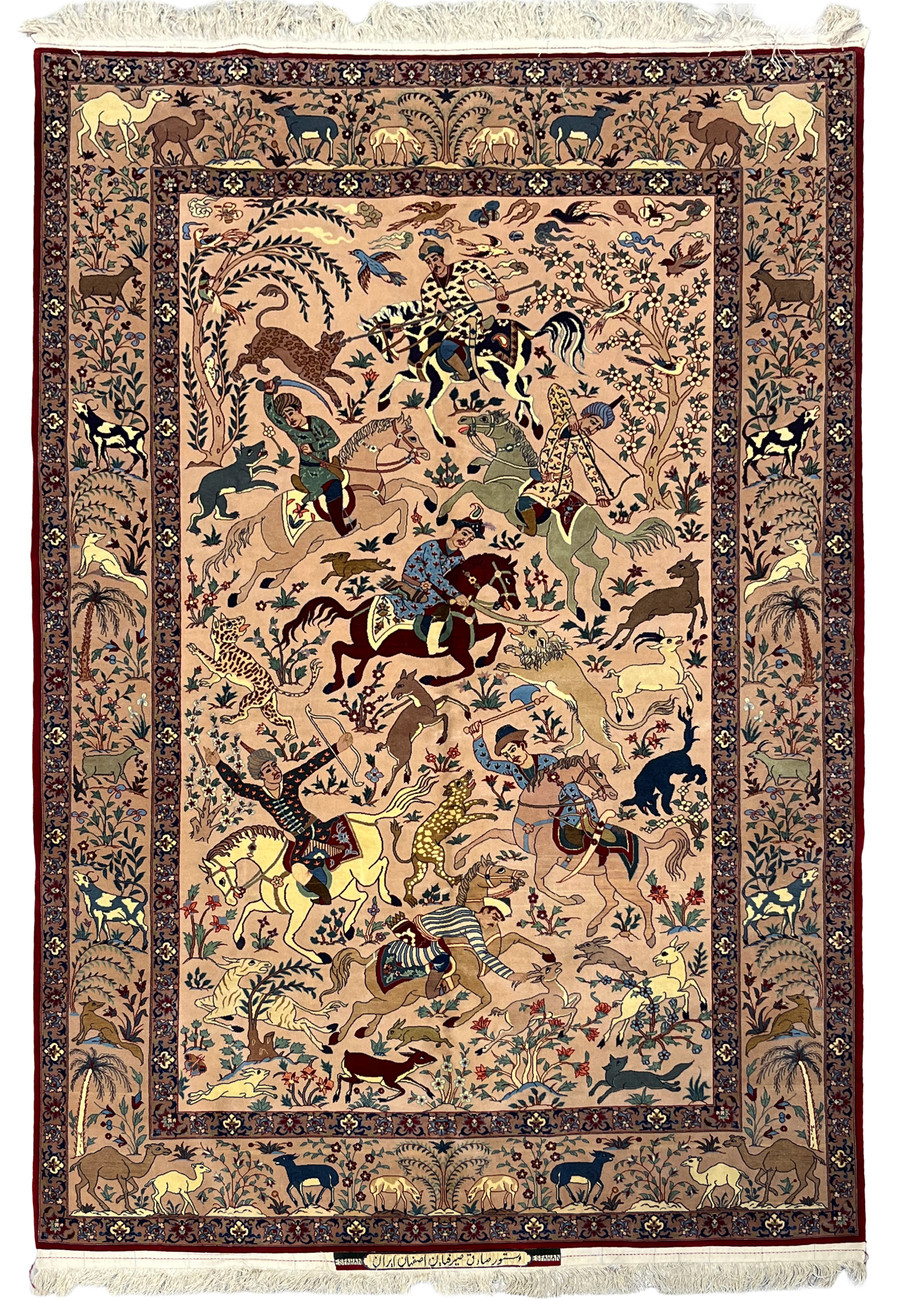
The two great names, side by side: a Habibian Nain with animals and birds in its garden, and a Seirafian Isfahan hunting scene. Same subject matter, two temperaments.
How Each Is Graded: LA vs. KPSI
Here is the first practical difference a buyer meets. Isfahans are graded the way most fine Persian rugs are, by knots per square inch. A good Isfahan sits around 400 to 500 KPSI; the signed masterworks run 600, 700 and beyond, with silk foundations that let the weaver tie knots almost too small to see.
Nains use their own system, the LA (or "laa") count, which describes how many strands of thread are twisted into each warp of the cotton foundation. The fewer the strands, the thinner the warp, the finer the weave. 9 LA is the standard fine grade, 6 LA is finer still, and 4 LA is rare and extraordinary. A 6 LA Nain lands roughly in the 400 to 500 KPSI range and a 4 LA can exceed 600, so at the top the two cities meet as equals; they simply describe the summit in different languages.

The Look: Ivory Calm vs. a Painter's Palette
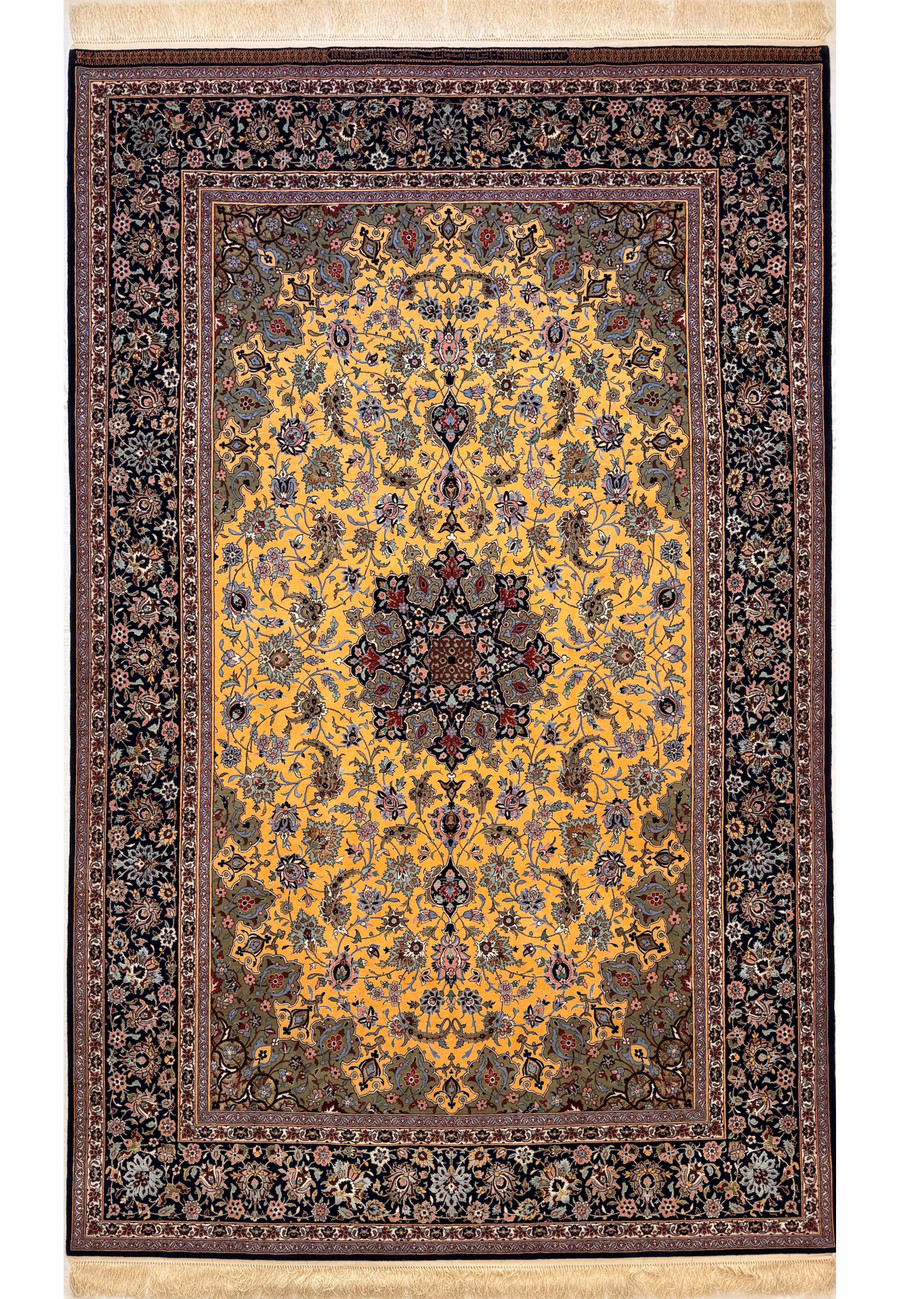
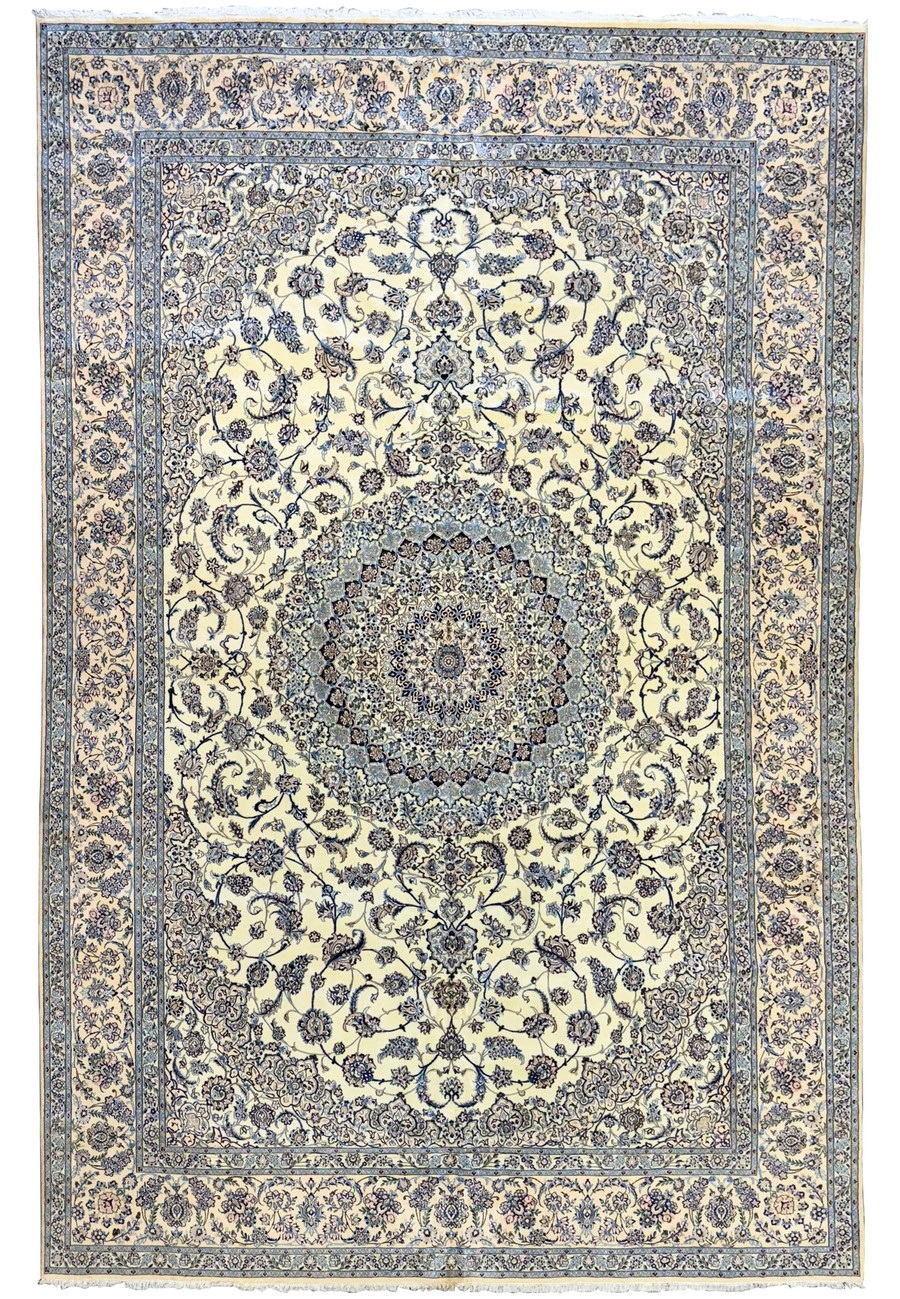
Put a Nain and an Isfahan on the same floor and the difference is visible from the doorway. Nain is disciplined: an ivory or cream ground, a medallion and corners in shades of blue from pale sky to deep indigo, and the motifs outlined in silk so the design seems drawn in light. The effect is cool, serene and quietly formal, which is why Nains work so well in contemporary interiors and with pale furniture.
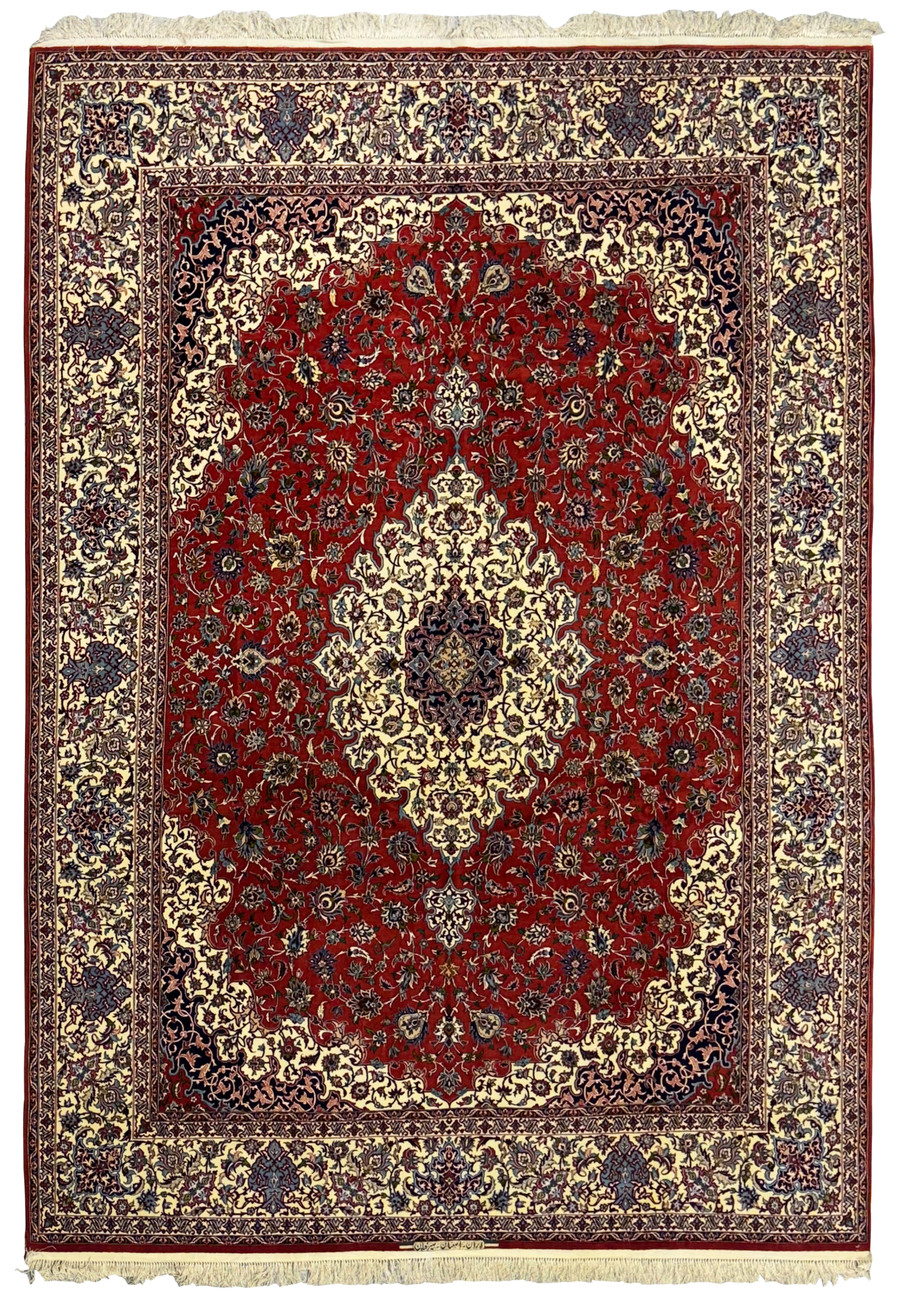
Isfahan is generous with color. Alongside ivory you will find deep reds, saffron, hunter green, rose and navy, often in the same rug, and the drawing is more curvilinear and pictorial: vases, birds, hunting scenes, the gol-o-bolbol flower and nightingale, all rendered with a painter's freedom. Silk highlights are used here too, but to make the arabesques shimmer rather than to outline them. The effect is warm, rich and traditional in the best sense.


Side by Side: The Facts
Both cities weave with the Persian knot in kork wool and silk. The differences are grading language, palette and temperament, not quality.
Sizes, Rooms and Which to Choose
Nain has a practical advantage at scale. The workshops weave large formats fluently, including true squares and palace sizes, so a 13x20 or a 16x16 Nain is not unusual. Isfahan concentrates its greatest effort in room sizes and smaller, where the density can reach its extremes; a signed Isfahan over 9x12 is a rare object and priced accordingly. If you need a grand, pale rug for a great room, Nain usually gets there first. If you want a jewel for a study or a dining room, Isfahan is hard to beat.
Then trust the room. A Nain flatters light walls, linen sofas and modern furniture; an Isfahan flatters dark wood, leather, books and traditional architecture. Both are heirlooms, both hold value, and both are on our floor to see by live video before you decide.


Buying Either One From Rugs.net
Whichever city wins your room, the terms are the same. Every Nain and Isfahan on our site is hand-knotted, one of a kind, and photographed and described by people who read the signatures in Farsi. Free shipping and free returns in all 50 states, a certificate of authenticity with every rug, and, for anything over 150 lbs, our own drivers deliver and, if ever needed, collect. White glove placement is available by appointment, and our reviews hold five stars on Google, every one of them.
What Nain and Isfahan Share at Rugs.net
✓ Kork wool and silk, hand-knotted in Persia
✓ Signatures authenticated in Farsi
✓ Live video of any rug on request
✓ Free shipping and free returns, all 50 states
✓ Certificate of authenticity with every rug
✓ Price beat guarantee, 10% below any authenticated source