
No city in America reads more closely than Cambridge, and that includes the objects in its houses. Between the university that predates the republic and the laboratories of Kendall Square, this is a town of people who ask where things come from, how they are made, and what they mean. A hand-knotted Persian rug is the rare furnishing that rewards all three questions, and some of the rugs below can be read almost literally, with poetry, prayer arches, and pictorial histories woven into the pile.
Triple-Deckers, Tory Row, and Faculty Moderns
Cambridge architecture is a seminar in itself. Along Brattle Street, the eighteenth-century mansions of Tory Row still stand behind their fences, Georgian and Federal houses that were old before the country was. The streets between the squares fill with Victorian triple-deckers, mansard-roofed Second Empire houses, and Queen Annes carved into condominiums where a single floor now costs what a whole house once did, because demand from two world-famous universities and the Kendall Square technology boom never lets up. And scattered through the west of the city sit the flat-roofed moderns that mid-century faculty built for themselves, decades ahead of the taste of their time.
The interiors share one trait across all three eras: they are built around books and conversation. The Cambridge room is layered rather than styled, its walls are shelved, its furniture is collected over decades and continents, and its floors, whether heart pine in a Victorian or polished concrete in a modern, want exactly one thing under all that thinking: a rug with substance. Not a decor accessory, an object with an argument. That is why Persian and Oriental rugs have furnished this city's studies since the nineteenth century, when Boston's collectors were among the first in America to treat them as art.
Four Rugs That Hold Up to Scholarship
We chose these four the way Cambridge buys books: for what is in them. An antique Kerman with actual poetry woven into its cartouches, a turn-of-the-century Tree of Life prayer rug, a pictorial rug drawn from archaeology, and the finest weave the city of Nain produces.

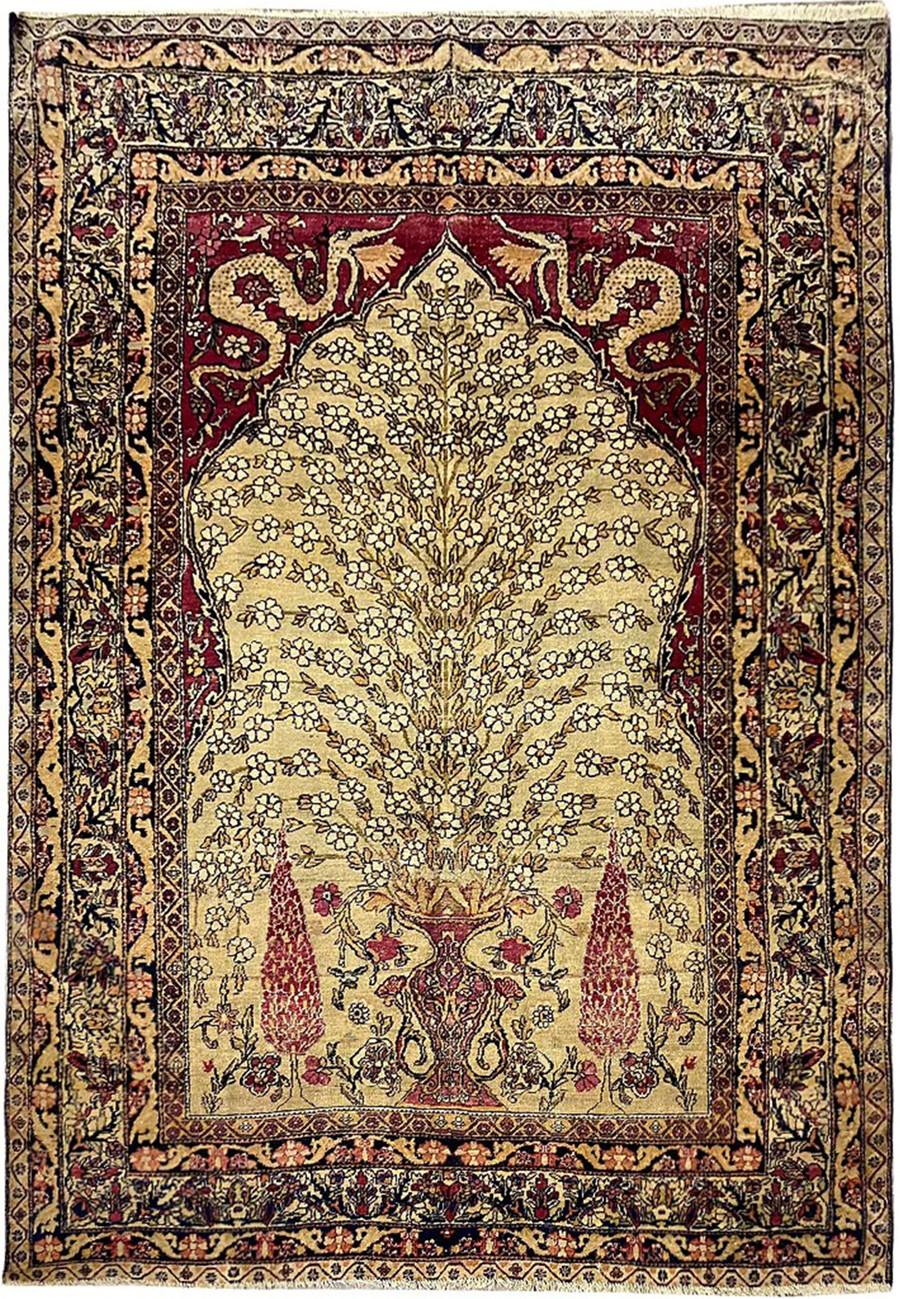

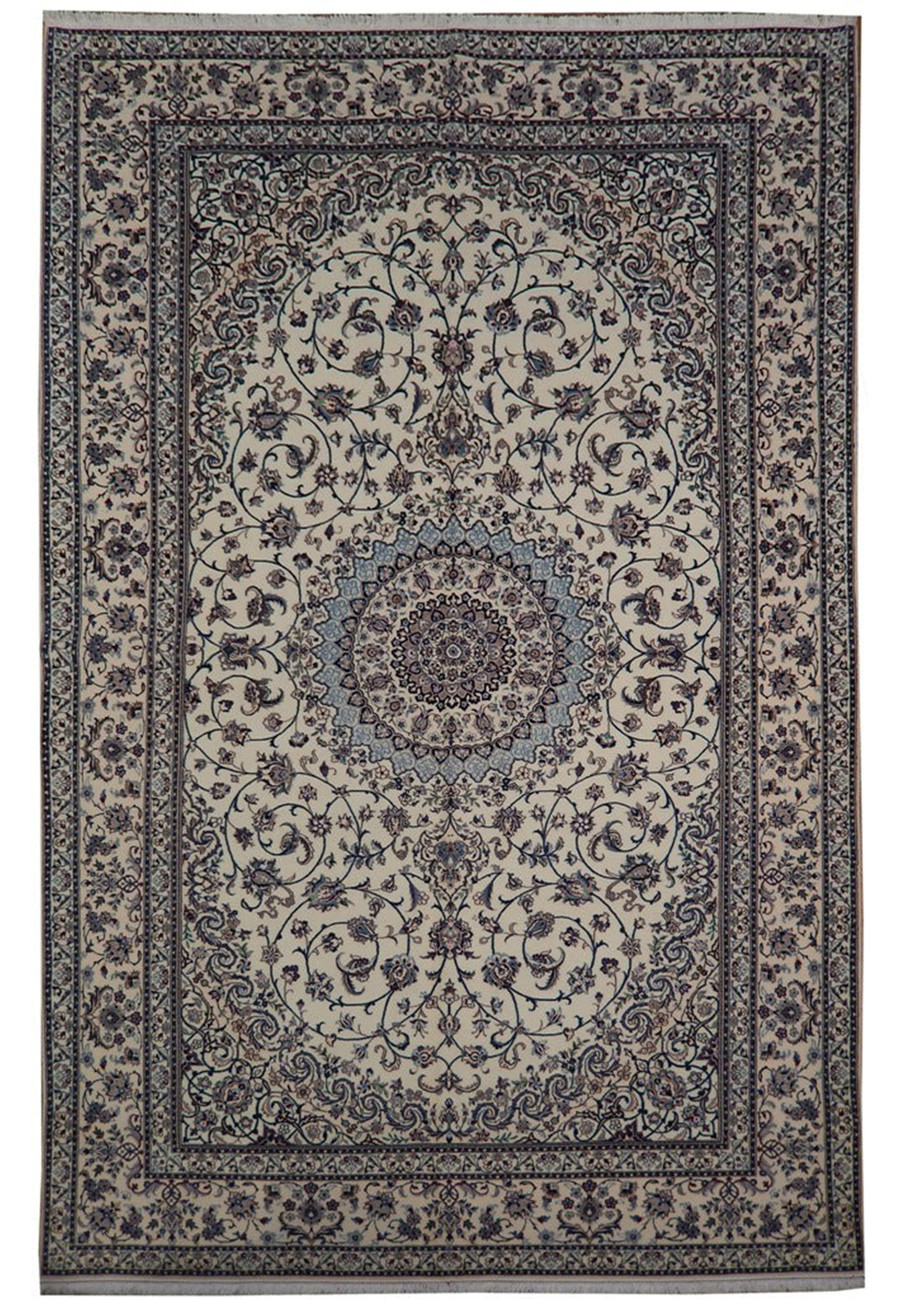
The 1880 Kerman is the library of the group, a genuine palace-size antique whose border carries woven cartouches of Persian poetry between pictorial panels of tigers and birds, a rug a Cambridge dinner party could discuss for an hour. The Tree of Life prayer rug is the collectible: small, over a century old, and dense with the oldest iconography in the weaving tradition. The Kashmar Zirkhaki draws the ancient world itself in wool, monuments and history in pictorial bands, for less than the price of a textbook semester. And the Habibian Nain 6La represents craft scholarship of another kind, the finest grade of Persia's most precise weaving city; our Habibian and 6La guide explains the grading system in full, and our foundation guide covers the construction beneath it all.
The Cambridge Standard
Every object in a Cambridge room eventually gets asked what it knows. A machine-made rug has no answer. A hand-knotted Persian rug answers in knot count, dye chemistry, iconography, and sometimes in actual verse.
Examined Before You Commit
Cambridge does not buy on faith, and we would not ask it to. Every rug ships free from our family gallery in Freeport, New York, where we have been in the trade since Hamburg in 1985, and every rug can be examined at home for 31 days with free return pickup and an immediate refund, peer review for the floor. Questions at any hour, phone or text, at (855) 576-7705, plus live chat and WhatsApp. And our customers say it better than we can, five stars on Google, every single review. If your search extends beyond the Charles, we also serve Alexandria and Charleston with the same terms.
Buying From Rugs.net in Cambridge
✓ Free shipping to Cambridge and all 50 states
✓ Free returns for 31 days with free home pickup
✓ White glove delivery by appointment
✓ 24/7 by phone and text: (855) 576-7705
✓ Immediate refunds, not store credit
✓ Price beat guarantee: find it lower, we beat it by 10%